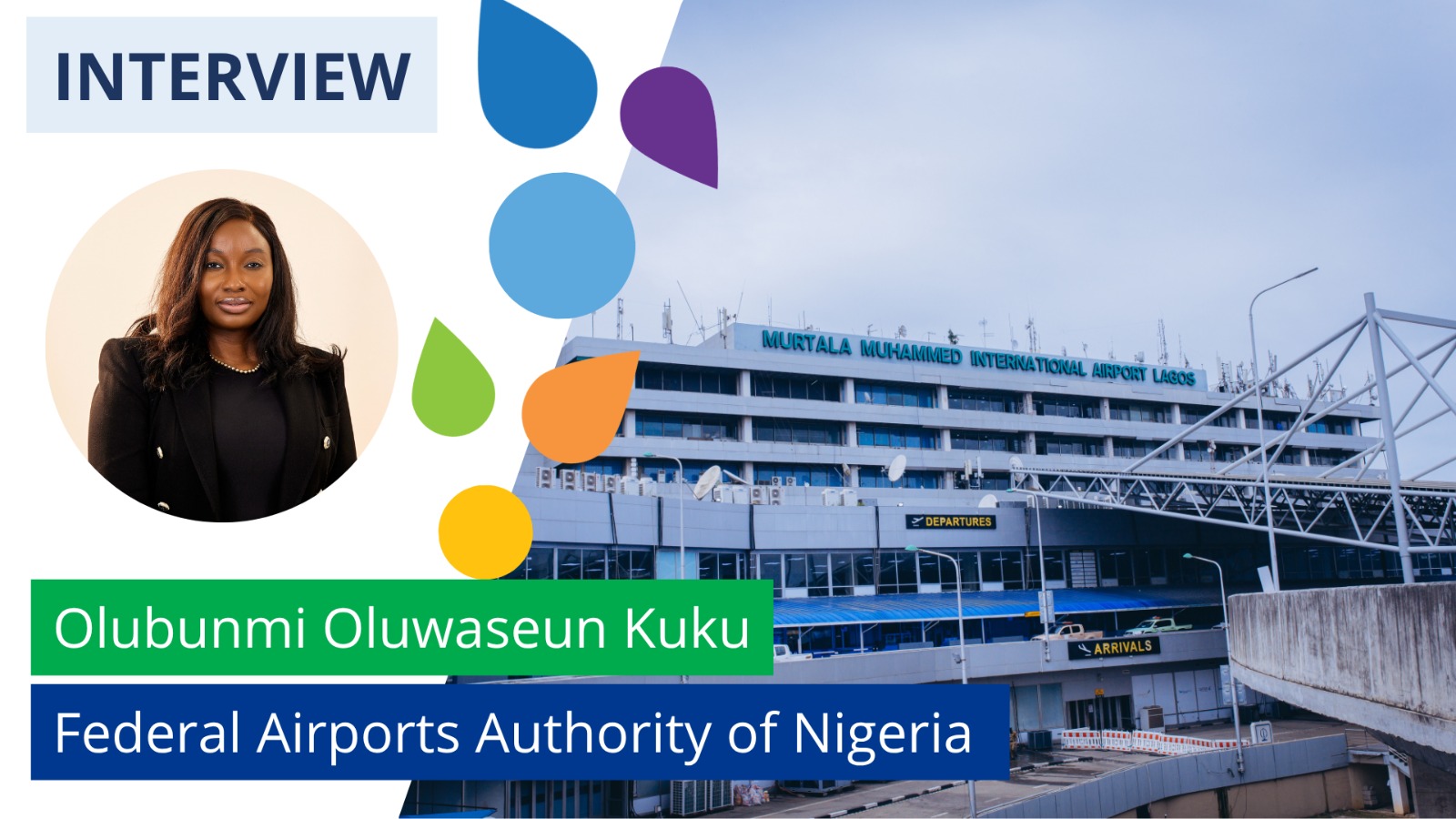

interview with Olubunmi Oluwaseun Kuku, Managing Director and Chief Executive of the Federal Airports Authority of Nigeria (FAAN)
As decarbonisation becomes a defining priority for airports worldwide, the Federal Airports Authority of Nigeria (FAAN) is advancing its carbon management approach across its network. Under the leadership of Olubunmi Oluwaseun Kuku, Managing Director and Chief Executive, FAAN is strengthening its focus on emissions reduction, energy efficiency and stakeholder engagement, with Murtala Muhammed International Airport leading the way through Airport Carbon Accreditation. In this interview, she shares the rationale behind FAAN’s strategy, the progress made so far, and the challenges and opportunities shaping the path ahead.
- You are leading FAAN as its first female Managing Director at a time when sustainability and decarbonisation are moving to the centre of airport operations. Drawing on your professional journey, what personally drives your focus on climate action, and how is that shaping FAAN’s priorities?
When we joined this administration about two and a half years ago, climate change and green energy were priorities from Day One. For me, it comes down to responsibility. We operate some of Africa’s busiest airports, and that carries an obligation to manage our environmental footprint seriously. Energy efficiency was the obvious starting point, but it quickly became clear that sustainability had to run deeper. It had to be embedded in how we make decisions, engage our stakeholders, and think about the long-term role of airports in Nigeria’s development. That is what is shaping FAAN’s direction. Not just ticking boxes, but genuinely building an organisation that sees sustainability as core to what we do.
- What motivated FAAN to join the Airport Carbon Accreditation programme, and how does this step support your broader vision for sustainable airport operations in Nigeria?
Sustainability sits at the heart of our strategic priorities as an airport, so joining the Airport Carbon Accreditation programme was a natural fit. The programme is well structured and closely aligned with the initiatives we already had underway, making it a genuine partnership rather than just a compliance exercise. FAAN joined the programme in 2018, and since this administration took office in 2023, we have significantly accelerated our efforts. We have now completed both Level 1 and Level 2 for the Murtala Muhammed Airport, and our focus at this stage is on reducing our Scope 1 and 2 emissions. These are the emissions directly within our control as airport operators, and that is where we believe we can make the most meaningful and measurable progress right now.
- Murtala Muhammed International Airport has already reached Level 2 of the programme. What practical lessons have emerged from this process so far, and how has participation influenced day-to-day operations at the airport?
Two key areas have guided our approach. First, we have focused on actions within our direct control. Second, we have worked to engage our critical stakeholders across the airport environment.
From an energy management perspective, the airport has traditionally relied heavily on Nigeria’s energy distribution companies, with consumption often billed on an estimated basis. One of the most important steps we have taken is the introduction of enhanced metering. This has given stakeholders much clearer visibility of their energy use and encouraged more responsible consumption.
This has translated into more efficient day-to-day operations, including switching off equipment when it is not in use. We have also upgraded lighting systems through a broad transition to LED technology and improved the efficiency of HVAC and air conditioning systems.
Sustainability is now embedded in our procurement processes. We collaborate closely with the carbon accreditation team within the Environment Directorate to ensure that purchasing decisions support our environmental objectives.
We are also encouraging behavioural change by promoting and incentivising practices that support efficiency and emissions reduction. Engagement has been central to this progress. Our carbon accreditation efforts are not limited to Murtala Muhammed International Airport but are being extended across several airports in our network.
- FAAN has recently introduced zero-emission electric transit services as part of its ground transport operations. How does this initiative support your carbon reduction objectives, and what further decarbonisation projects are planned in the coming years?
We have introduced electric transport services at both the Murtala Muhammed International Airport and the Nnamdi Azikiwe International Airport, Abuja. These include commuter buses linking the airports to the city, as well as on-demand transport services similar to ride-hailing platforms, many of which operate electric vehicles.
We have also approved a significant number of electric vehicles for use at Lagos Airport. In addition, we are deploying electric vehicles within our airside operations, supported by solar-powered charging systems.
The objective is to reduce reliance on fossil fuels across our transport systems. We are also working to convert existing vehicles, generators, and other equipment to lower-emission alternatives.
Alongside this, we are expanding renewable energy initiatives, including solar installations at administrative buildings and across parts of the airport infrastructure, such as lighting.
Another important area is waste management. We have launched a recycling initiative focused on sorting and separating waste, with the infrastructure being rolled out. The next phase will explore waste-to-power solutions.
All of this is supported by ongoing stakeholder engagement and training to ensure alignment across the airport community.
- Looking across FAAN’s airport network, do you plan to expand participation in the Airport Carbon Accreditation programme, and if so, what challenges do you anticipate in achieving this?
Yes, we plan to expand to other airports. Murtala Muhammed International Airport has served as a test case, allowing us to explore different decarbonisation approaches and develop a practical model.
We have already introduced smaller initiatives at secondary and other international airports, and we intend to build on this.
The main challenge is not only defining the strategy, but ensuring that all stakeholders are aligned. This includes employees, operators and surrounding communities. Achieving shared commitment is essential for delivering our objectives.
- As global expectations around Scope 3 emissions continue to rise, how is FAAN preparing to address emissions beyond its direct operational control? How are you currently working, and how do you plan to work in the future, with airlines, ground handlers and other partners to help reduce their emissions?
We began stakeholder engagement early, extending beyond our own operations to include concessionaires and other partners. We are already seeing encouraging progress, with some ground handlers adopting more energy-efficient vehicles and equipment.
We have also begun installing electric charging stations to support both airport operations and external partners. These steps form part of a broader decarbonisation approach that prepares us to address Scope 3 emissions in a structured way.
- Decarbonising airport operations in Nigeria comes with specific technical, financial and regulatory challenges. Which have proven the most difficult so far, and how is FAAN working to overcome them?
One key area is regulatory alignment. Our environment team works closely with regulators to ensure that they understand our initiatives and that required approvals are handled efficiently.
We are also actively participating in national and international working groups, including those focused on sustainable aviation fuel and carbon-reduction initiatives. This collaboration helps ensure that both the airport and the wider aviation sector are aligned in their approach and committed to reducing emissions.
- From your perspective, what role can African airports play in global climate action, and how can Airport Carbon Accreditation support them?
African airports play an important role, particularly as traffic continues to grow. For example, Murtala Muhammed International Airport ranks among the busiest on the continent in terms of passenger traffic.
There is a clear need for investment in infrastructure and stronger regional integration, including initiatives such as the Single African Air Transport Market. These developments can improve both connectivity and sustainability. Airport Carbon Accreditation provides a structured framework that helps airports contribute meaningfully to global decarbonisation efforts.
- Based on your experience so far, what advice would you offer to other African airports that are considering joining Airport Carbon Accreditation and taking their first steps towards structured carbon management?
The first step is to develop a clear understanding of what the programme involves. Uncertainty can often be a barrier.
Airports should start with practical, achievable initiatives that reflect their local context. Conditions vary significantly across regions, particularly in terms of energy sources and operational constraints.
It is also important to ensure strong leadership support and to build internal commitment. Starting small and building progressively helps maintain momentum and avoids unnecessary complexity.